
Last updated November 25, 2026
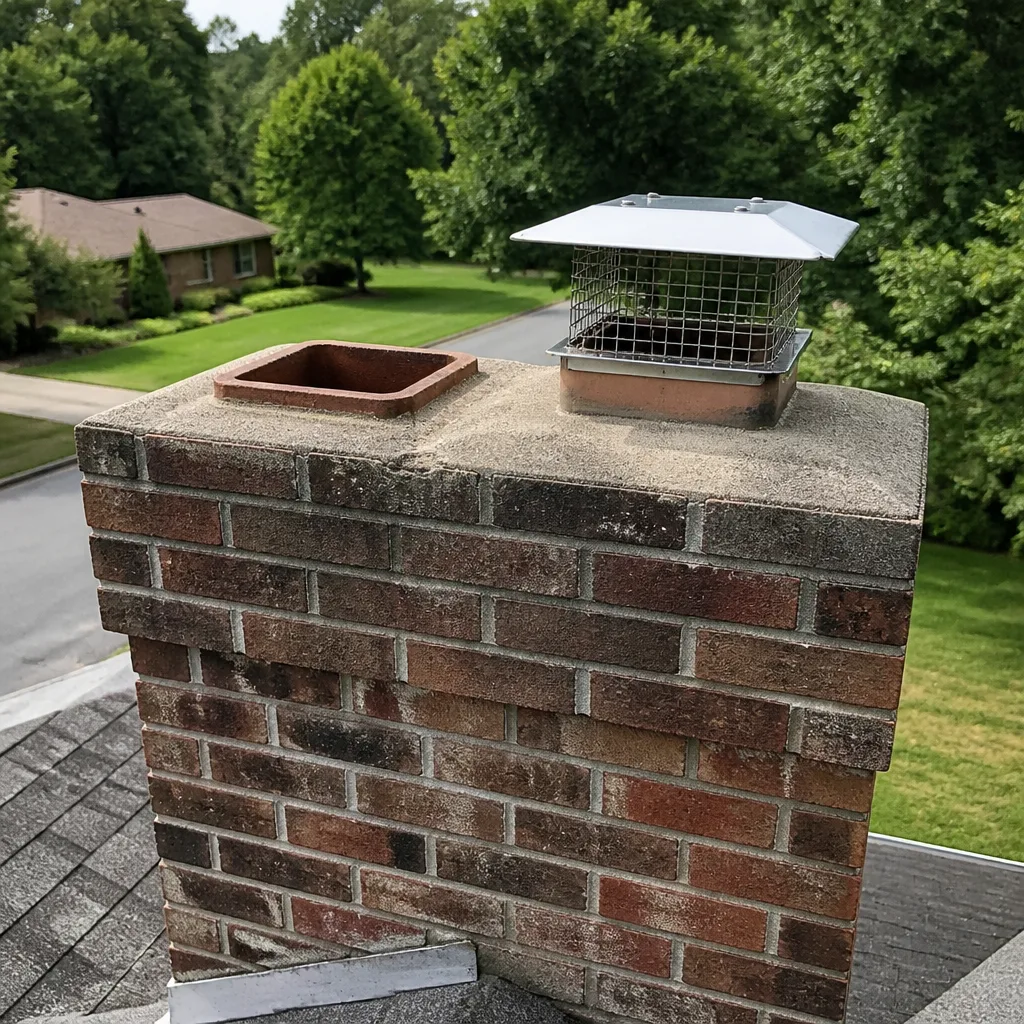 Sweep & inspection
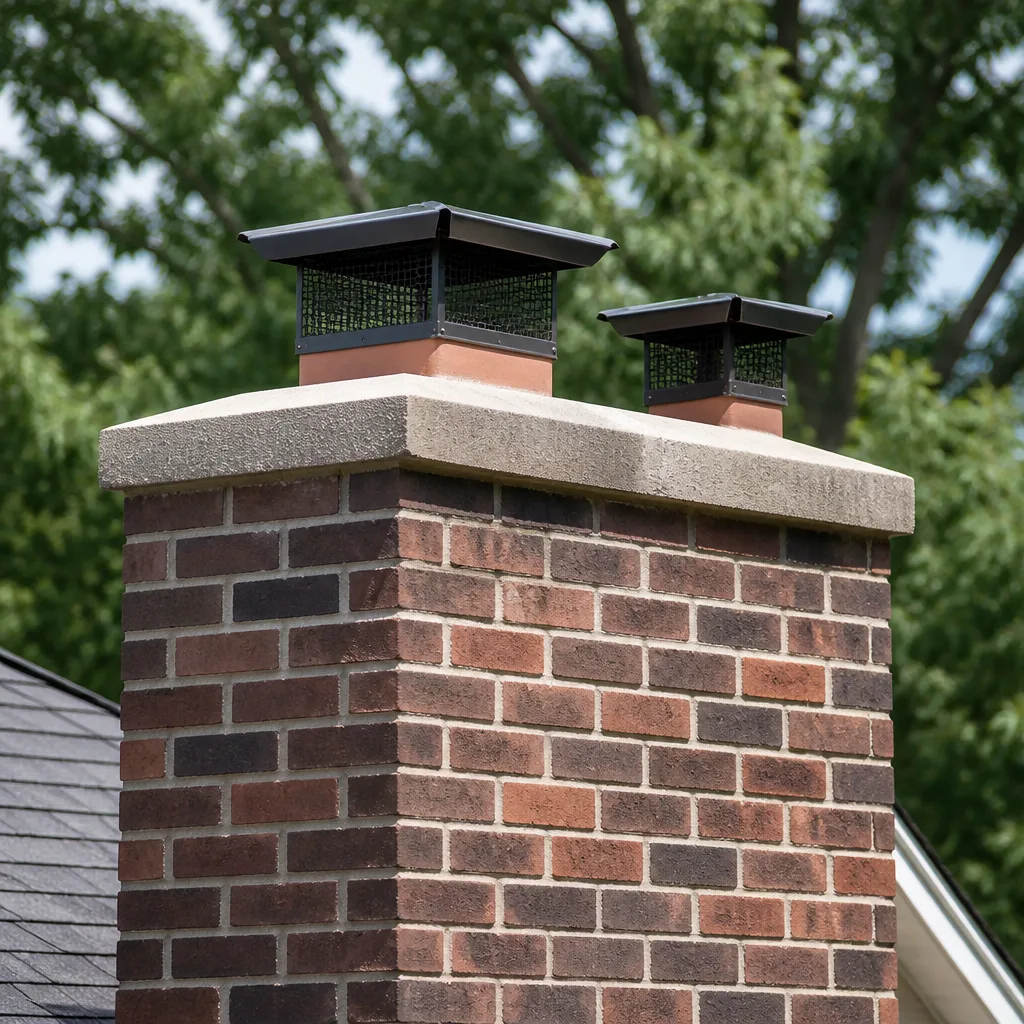 Caps & crowns
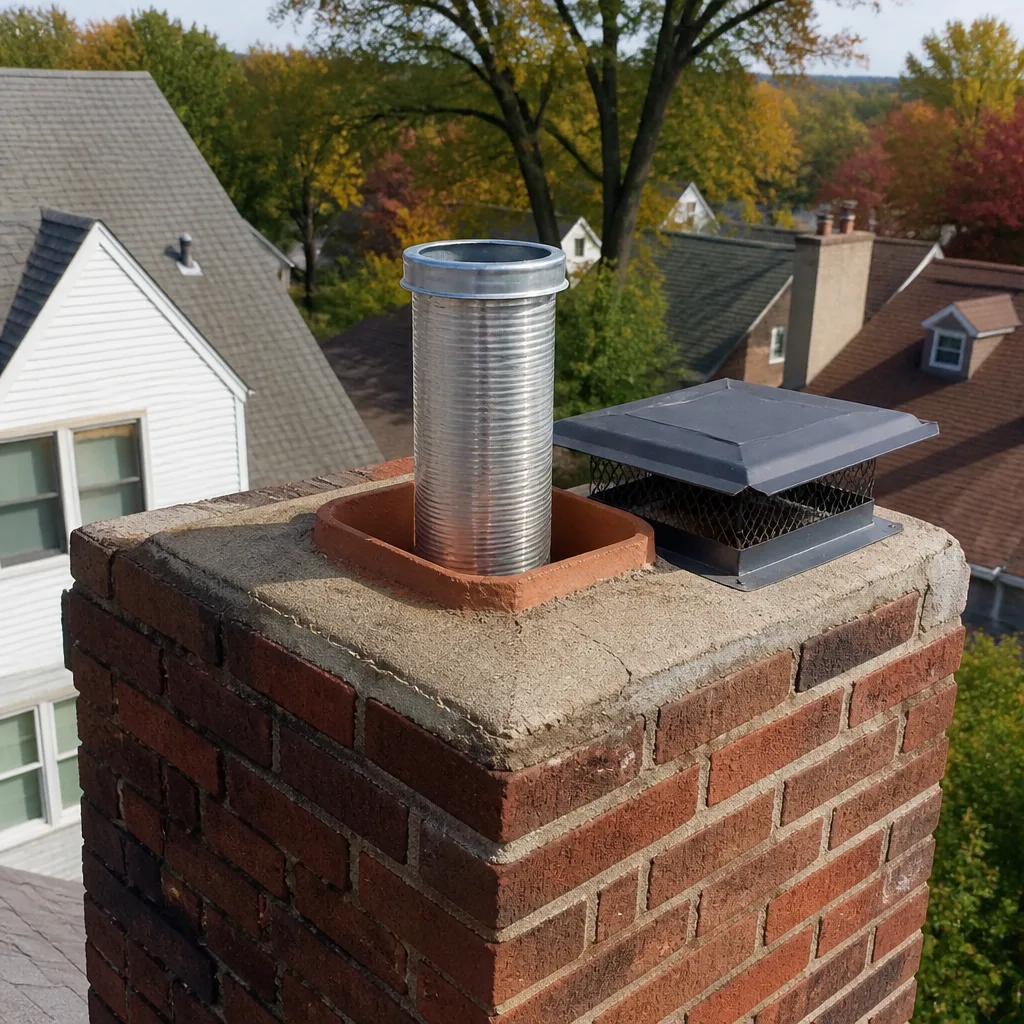 Flue relining
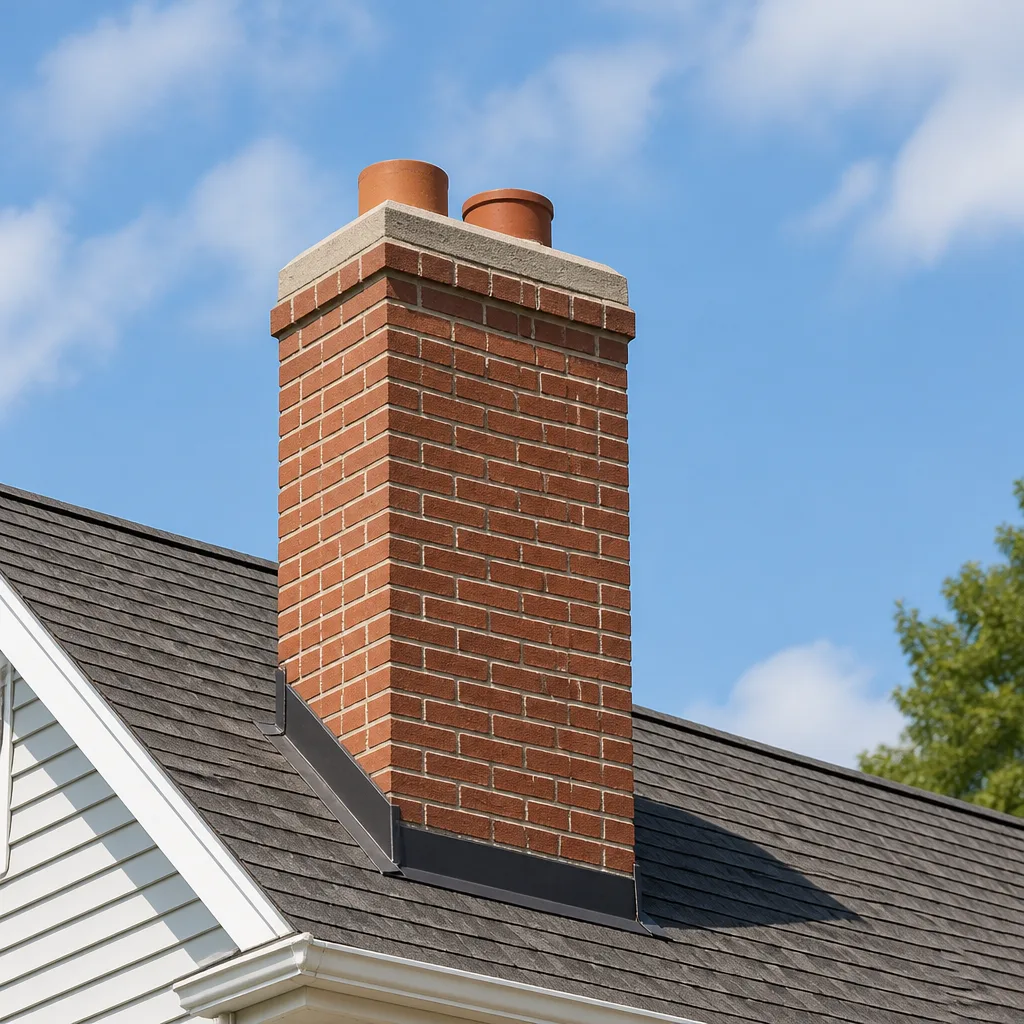 Masonry repair
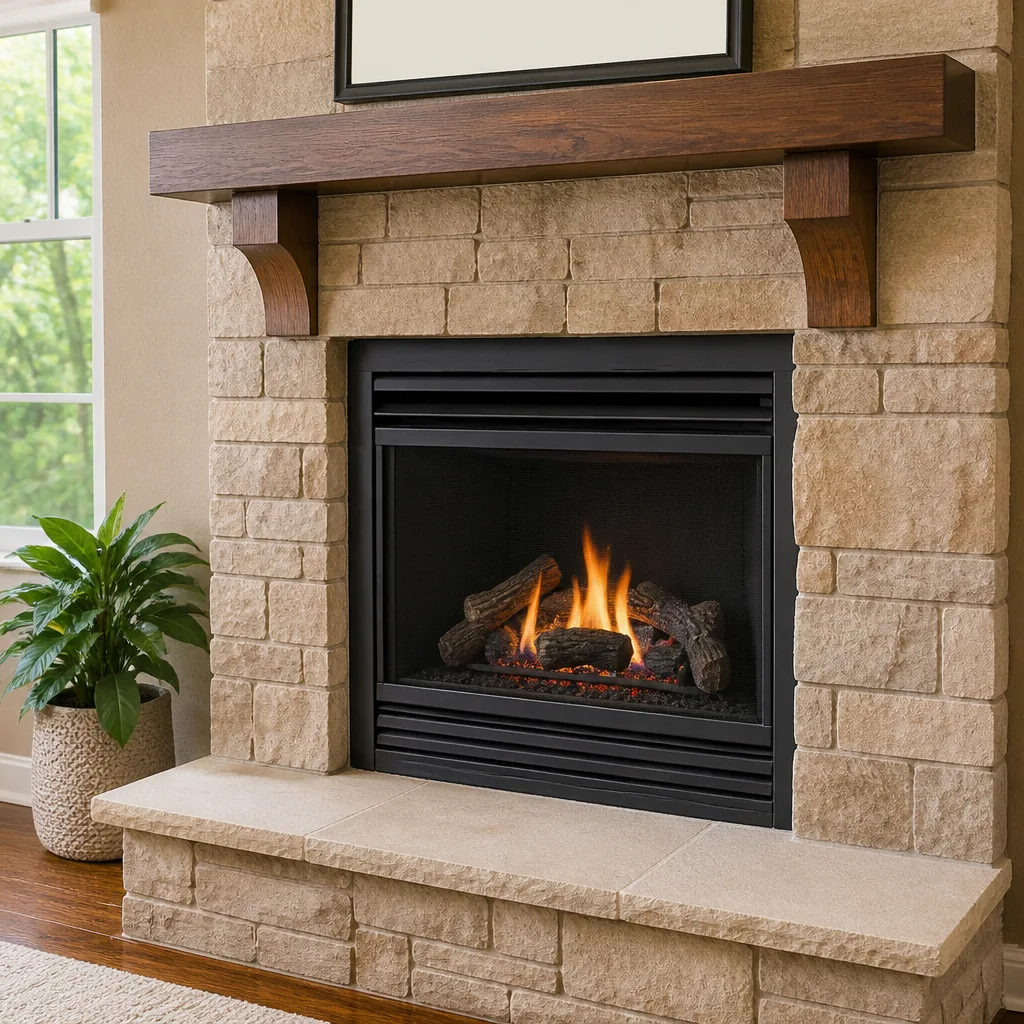 Gas fireplace service
Level 1 sweep and inspection to the NFPA 211 annual standard - flue, crown, cap, and flashing checked and photographed
Chimney sweep logs do not sweep chimneys. They loosen some creosote - which then falls where a brush and vacuum still have to collect it.
Chimney Cleaning Warning Signs: A Jamaica Plain Homeowner’s Reference Guide
The smell of creosote in your living room isn’t a sign your chimney needs cleaning. It’s a sign something has already gone wrong with the draft, and sweeping the flue alone may not fix it. Most homeowners treat every chimney symptom as one item on a single checklist: “call the sweep.” That’s the mistake. Your chimney communicates through three separate channels – what you smell, how smoke behaves, and what deposits and staining you can see – and each channel points to a different problem with a different urgency. This guide teaches you to read them in sequence so you know whether to schedule routine work or stop using the fireplace until it’s inspected. It’s written for the older housing stock and dense blocks of Jamaica Plain, where fireplaces share walls, flues are often original, and a small draft issue can be a real safety matter.
Quick Answer
The main chimney cleaning warning signs are a strong creosote smell inside the house, smoke that spills into the room instead of rising, glazed or tar-like deposits on the flue walls, white staining on exterior brick, and unusual sounds or drafts coming from the fireplace. Which of these you see determines whether you schedule a cleaning, inspect the draft and liner, or stop using the chimney until a professional checks it. Glazed creosote and smoke rolling back into the room are the two you treat as stop-use signs.
Styles & brands we work with
- Sweep & inspection
- Caps & crowns
- Flue relining
- Masonry repair
- Gas fireplace service
Table of Contents
- Reading Your Chimney in Three Layers
- What Smell Tells You: Draft vs. Creosote
- Smoke Behavior: The Most Honest Signal
- Creosote Grades and What Each One Means
- White Staining on Exterior Masonry
- Sounds and Drafts That Point to a Liner Breach
- Warning Signs That Matter If You Rent Out a Unit
- The Full Diagnostic Sequence, Step by Step
Reading Your Chimney in Three Layers
Every chimney warning sign belongs to one of three systems, and confusing them is what leads homeowners to pay for the wrong service. The three layers are the draft, the flue surface, and the structure. They fail at different rates and give off different signals.
Draft problems show up as smell and smoke behavior. The fire pulls poorly, smoke curls back at the damper, or the room smells like soot a day after you’ve burned. Draft failures come from a blocked flue, a flue that’s too short or too cold, a house that’s too tight, or a negative-pressure situation created by another exhaust appliance. Cleaning doesn’t fix draft. It can help when a partial obstruction is the cause, but an experienced technician has to check before anyone promises relief.
Flue surface problems show up as deposits. You see them with a flashlight and a mirror, or on camera. Soot and creosote build on the walls, and at the high end of that buildup you get glazed creosote, which cleaning cannot always remove and which is the reason people stop using the fireplace.
Structural problems show up in the masonry, the cap, the crown, and the liner. White staining on exterior brick, loose mortar, a cracked crown, or water in the firebox after a storm all point to the outer shell letting moisture in. In Jamaica Plain, with so much brick housing from the late 1800s and early 1900s, this third layer comes up often – the flue interiors have had a long life.
Photograph what you notice before you call. A short video of smoke behavior is worth more than a description, and it helps the technician reproduce the condition when they arrive. Read all three layers before you decide what kind of visit you need. Our Chimney Sweep Jamaica Plain page explains the services if you want to book directly.
What Smell Tells You: Draft vs. Creosote
The creosote smell in your living room is usually a draft symptom, not a cleaning symptom. When a chimney is drafting correctly, it pulls air up and out; the house shouldn’t smell like the firebox. When you smell soot, tar, or a campfire odor hours after the fire is out, air is coming down the flue instead of going up, or the pressure in the house is pulling fireplace air into the room.
Common causes:
- Cold flue. The chimney isn’t warm enough to establish an upward draft. Different from a dirty chimney, and sweeping alone won’t solve it.
- Negative pressure. Bathroom fans, kitchen exhaust, dryers, or a tightly sealed house pull air down the flue. Common in renovated Jamaica Plain units where weatherization has tightened the envelope.
- Blockage. A bird nest, a collapsed flue tile, or a heavy creosote shelf. This one does require cleaning or repair.
- Adjacent flue sharing. In multi-flue chimneys, especially in attached JP homes, one flue can pull from another when the separation is compromised. This is a liner issue, not a cleaning issue.
The smell test that distinguishes the two: does the smell appear only when the fire is burning, or also when it’s cold? Odor during a fire points toward draft and smoke spillage. Odor with no fire, especially on humid or windy days, points toward a flue that’s leaking or a house that’s pulling air the wrong way. If it’s the second one, cleaning won’t help, and you’ll want a chimney sweep visit that includes a draft check to confirm.
One more distinguishing point: creosote smell from the firebox itself is not the same as the smell of an actual creosote fire hazard. A strong, sharp, tar-like smell close to the flue during or just after a fire, along with a low roar, is a chimney fire symptom. If you suspect that, stop using the fireplace and call. We answer 24/7. A call outside dispatch hours is booked into the next opening, Sunday through Friday, 7am to 7pm.
Smoke Behavior: The Most Honest Signal
Smoke is the single most reliable indicator because you don’t need special tools to watch it. What it does when you light a fire tells you which layer is failing.
- Smoke rises steadily and disappears up the flue. Normal draft. No action needed beyond your usual cleaning schedule.
- Smoke curls back at the damper, hesitates, then rises. Weak draft, often a cold flue or a slightly tight house. Open a nearby window a crack before lighting; if it clears, pressure or temperature is the issue, not soot.
- Smoke rolls into the room and stays. Stop using the fireplace. This can be a blockage, a broken damper, a reverse-drafting flue, or a liner that has lost its seal. Have it inspected before you burn again.
- Smoke drifts from seams in the masonry, or from around the damper plate. This points at the structure. A cracked flue tile or a compromised liner allows smoke to escape into the wall cavity. This is a stop-use condition.
- Smoke pulses with wind, or appears only on windy days. Often a crown or cap issue, or a downdraft created by nearby rooflines. Jamaica Plain’s tight lots and mixed rooflines make downdrafts more common than in open suburban settings.
Compare smoke behavior across floors if you live in a multi-story JP triple-decker or a tall single-family. Smoke that spills on the first floor but drafts correctly on the second tells you the problem sits between them – often a mid-height liner joint. That’s the kind of detail a camera inspection resolves quickly, and it’s the difference between scheduling a cleaning and scheduling a chimney sweep with a flue camera.
Creosote Grades and What Each One Means
Creosote is graded by how hard it is and how much it threatens the flue. The grade matters more than the volume. A lightly sooted flue is a routine cleaning. A glazed flue is a stop-use situation.
- Stage 1 – soot and light flaking. Soft, easy to brush. Schedule cleaning when you hit the interval for your burning habits.
- Stage 2 – hard, crusty, but removable with a proper sweep. Still a cleaning matter, but the buildup shows the fireplace is being over-fired or burning wet wood. Worth a conversation about burning habits.
- Stage 3 – glazed, tar-like, shiny. Hardened creosote that has gone through repeated heating cycles. This is the fire-hazard grade. Ordinary brushing won’t remove it, and the right next step is a professional evaluation before you use the fireplace again. Chemical treatments or liner restoration may be required.
You can look for the tell-tale without getting up on a roof: shine a bright flashlight into the firebox, angle it up the flue with a mirror, and look for a dark, glossy surface. If the flue wall looks like wet asphalt rather than dusty black soot, assume Stage 3 and stop burning until it’s checked.
Two local factors push buildup: burning unseasoned wood, and burning habits that produce long, cool, smoldering fires. The first is common in Jamaica Plain when homeowners buy firewood in late fall and burn it that season; the second is common when a wood stove is used as a supplemental heat source running at low output for hours. Both push the creosote toward Stage 2 and 3 faster than an open hearth used a few evenings a week.
What to do depends on what the technician finds. When a full liner isn’t required, we use HeatShield to resurface the interior flue where it’s a match for the flue’s condition, and install DuraFlex liner systems when replacement is the correct route. We source components through established suppliers like Olympia Chimney, so the materials meet the same specification professional chimney contractors specify nationwide.
White Staining on Exterior Masonry
The white, chalky staining on exterior brick around a chimney stack is called efflorescence, and it’s the most commonly missed warning sign on the outside of a Jamaica Plain chimney. Most homeowners dismiss it as age. It means moisture is moving through the masonry and evaporating on the surface, leaving mineral salts behind.
Where the moisture is coming from is what tells you how serious it is:
- Wicking from the ground or interior humidity. Usually low-grade and slow. Worth monitoring.
- A failed crown. The concrete crown at the top of the stack is supposed to shed water away from the flue. When it cracks, water enters the chimney from above, and efflorescence appears on the stack. This is a fixable problem, and early repair prevents much more expensive damage down the line.
- A missing or failing cap. Water entering the top of the open flue, or rain driving in past a damaged cap, will produce interior moisture that finds its way through the masonry.
- A deteriorated liner or a compromised mortar joint. Moisture from inside the chimney. The most serious of the four, and the one most likely to also produce smoke-spillage symptoms.
Efflorescence on a Jamaica Plain brick stack is often accompanied by a subtle signal you can see from the ground: soft, crumbling mortar joints, especially on the side that catches prevailing weather. Run a finger along a joint – if it powders away, the chimney is being eaten from the outside in, and the crown and cap are the first two things to check. Our chimney cap & crown service exists for exactly this reason: stopping water at the top of the chimney is the cheapest reliable way to prevent deeper damage.
Interior efflorescence is harder to spot without a camera. If you see white staining on the firebox brick or above the damper plate, or a rust line where the damper frame sits, assume moisture is entering from somewhere above and get it inspected.
Sounds and Drafts That Point to a Liner Breach
A liner breach produces symptoms that don’t look like a dirty flue at all. Homeowners often assume the chimney just needs a sweep, when in fact the flue wall has lost its seal. The three signs worth knowing:
- Sound. A hollow roar, a flutter, or a distinctive whistling from a hot fire can indicate air being pulled through a gap in the liner rather than up the intended path. In a multi-flue Jamaica Plain home, you’ll also sometimes hear the fire from a neighboring flue – that’s a sign the flues aren’t sealed from each other as they should be, which often means a shared interior chimney has a breach.
- Draft that feels intermittent. Strong on a cold, dry day, weak on a mild or humid one. A breached liner lets outside conditions reach the flue where they shouldn’t, and the variance is a tell.
- Uneven heat or smoke at the damper. If the damper area is warm when the fire is burning but the flue above feels cool, or if smoke gathers at the damper plate instead of passing through it cleanly, suspect a break in the flue connection just above the firebox.
The reason these matter in Jamaica Plain specifically is the housing stock. Older rowhouses and triple-deckers frequently have original clay-tile flues with offset joints, and those joints are where liners fail first. A camera inspection finds them fast. When a repair is required, DuraFlex flexible liner systems are the standard fix – they create a continuous, sealed path within the old flue rather than relying on the original tile. For flues that are structurally intact but have lost their interior surface, HeatShield resurfacing can restore the flue without a full replacement, when the condition of the chimney makes that the right call.
Warning Signs That Matter If You Rent Out a Unit
If you rent out a Jamaica Plain unit with a fireplace – a whole apartment, an owner-occupied triple-decker with a rental floor, or a condo you lease – the warning-sign picture shifts. Some signals that are a “schedule a sweep” for an owner become a “document and fix before the next lease” for a landlord, because you’re now responsible for a system other people use.
The signs that should push you to get an inspection are:
- Smoke smell in the rental unit that the tenant reports but you can’t reproduce. Could be intermittent draft, could be a shared-flue issue between the rental fireplace and your own. Shared chimneys in JP multi-unit buildings make this common.
- Any glazed creosote visible on camera. You can’t leave a Stage 3 flue in service for a tenant.
- Efflorescence on the exterior stack of a rental unit. Structural, and the kind of thing that gets flagged if the unit is later sold or refinanced.
- No documentation of the last inspection. If you can’t produce a current report, get one. A standalone inspection is proof – for insurance, for a lender, for a real estate transaction, and for your own records.
A note on what we can tell you and what we can’t. We can inspect, document what we see with camera footage and photos, and provide a written report you can hand to a tenant, an insurer, or a buyer. We can’t give legal advice on landlord obligations in Massachusetts – if you want a legal ruling on what your lease or the state housing code requires, that’s a conversation for an attorney. What we can do is make sure the physical record is accurate and current.
If a tenant reports any of the stop-use signs – smoke rolling into the room, a real chimney fire smell, or soot appearing on furniture – the safest move is to suspend fireplace use in that unit until it’s inspected. The cost of an inspection is nothing compared to the consequences of a flue failure in an occupied building. Call (844) 443-3530. We answer 24/7. Fast dispatch from 7am to 7pm, Sunday through Friday.
The Full Diagnostic Sequence, Step by Step
Here’s the sequence we walk through when we’re sorting symptoms. You can run it yourself up to the point where a camera is required. After that, it’s a professional call.
- Smell the room cold. If you smell creosote or soot with no fire burning, note it. Check whether the smell is stronger near the fireplace or near the ceiling.
- Watch a small test fire. Use one or two small, dry splits. Watch where the smoke goes in the first 60 seconds. Rises and clears – normal. Curls back or lingers – draft issue. Rolls into the room – stop use.
- Check for smoke at seams. Look along the firebox edges, around the damper plate, and at any visible masonry joint above the firebox. Any smoke escaping from these points is a stop-use signal.
- Look into the flue with a light and a mirror. Note whether the wall is dusty, crusty, or shiny. Glossy means Stage 3; stop and call.
- Walk the exterior. From the ground, look at the crown – is the concrete intact, or is it cracked and pulling away from the flue? Look at the cap – is it present and intact? Note any white staining.
- Test the pressure. Turn on bathroom and kitchen fans with the fireplace cold. If you feel a down-draft at the open damper, the house is pulling air from the flue. Draft problems that only appear under those conditions are pressure, not cleaning.
- Book a professional inspection. The step where the flue is scoped with a camera, the crown and cap are assessed, and you get a written report with photographs. The technician will tell you clearly whether the work can wait, whether it should be scheduled this season, or whether it needs addressing before the next fire.
A cleaned flue isn’t automatically a safe flue. The full system – draft, flue, structure, cap and crown – is what keeps the whole thing safe, and the sequence above is designed to look at all four before deciding what’s actually needed. We inspect first, then recommend. If nothing needs work, we say so.
Common Mistakes to Avoid
- Treating every symptom as a cleaning signal. Most warning signs aren’t soot, they’re draft, structure, or liner. Booking a cleaning when you need an inspection wastes money and leaves the actual problem in place.
- Dismissing white exterior staining as “just age.” Efflorescence on a Jamaica Plain brick stack usually means water is going somewhere it shouldn’t. The earlier you trace it, the cheaper the fix.
- Burning unseasoned wood to save time. Wet wood drives creosote buildup faster than dry wood. A moisture meter costs less than a liner repair.
- Assuming a cleaning cycle every year is the rule for every home. Sweeping interval depends on how much you burn, what you burn, and what kind of fireplace you have. A wood stove used daily needs attention more often than an open fireplace used a few dozen evenings a season.
- Calling a general handyman for a chimney problem. Chimney systems are a specific trade. Structural repair, liner installation, and flue diagnosis aren’t the kind of work a generalist handles safely.
- Ignoring the smell of a neighbor’s fireplace in a shared chimney. In a JP two- or three-unit building with a shared chimney stack, cross-drafting between flues is a signal that one of the flues has lost its seal.
- Skipping the cap because it “looks fine from down here.” Twenty percent of chimney damage starts at the top of the stack after the cap or crown fails, and the damage shows up months later. Inspecting it once a year from the ground costs nothing.
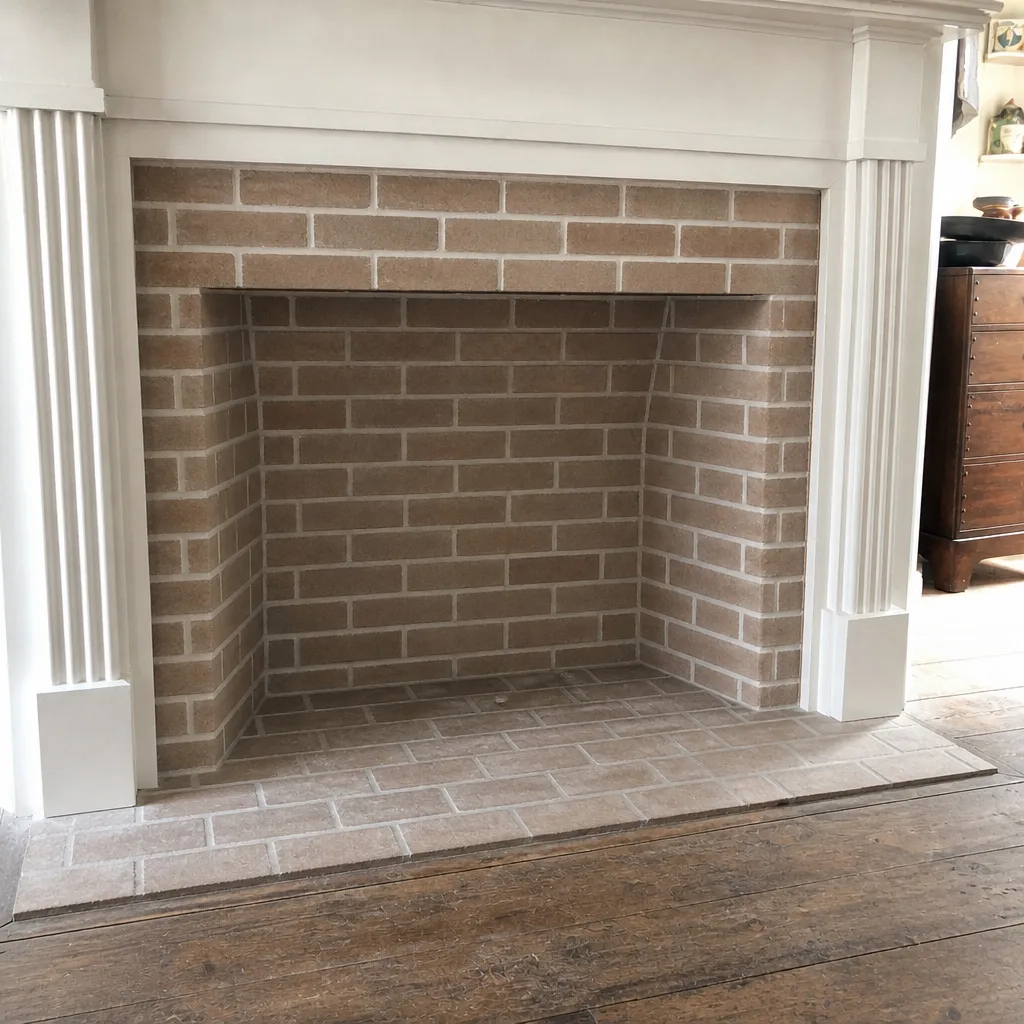
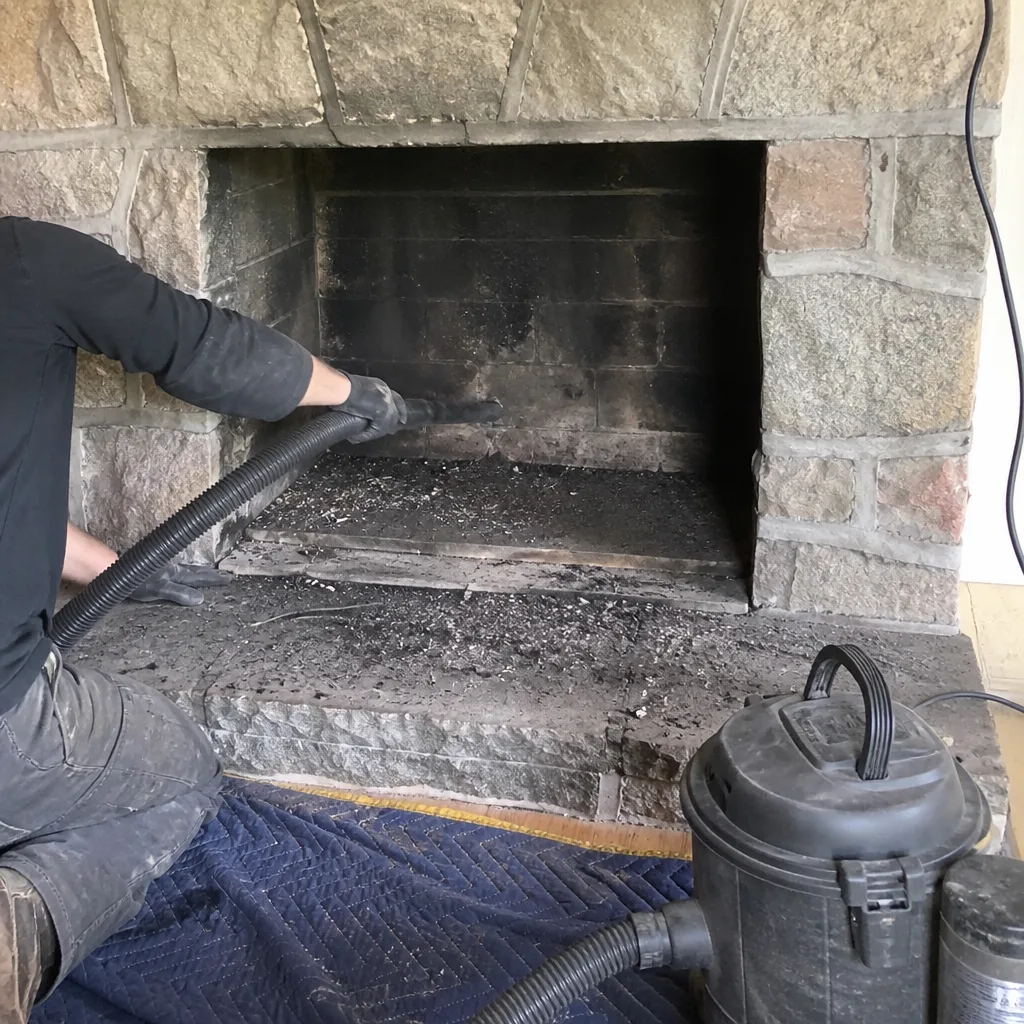
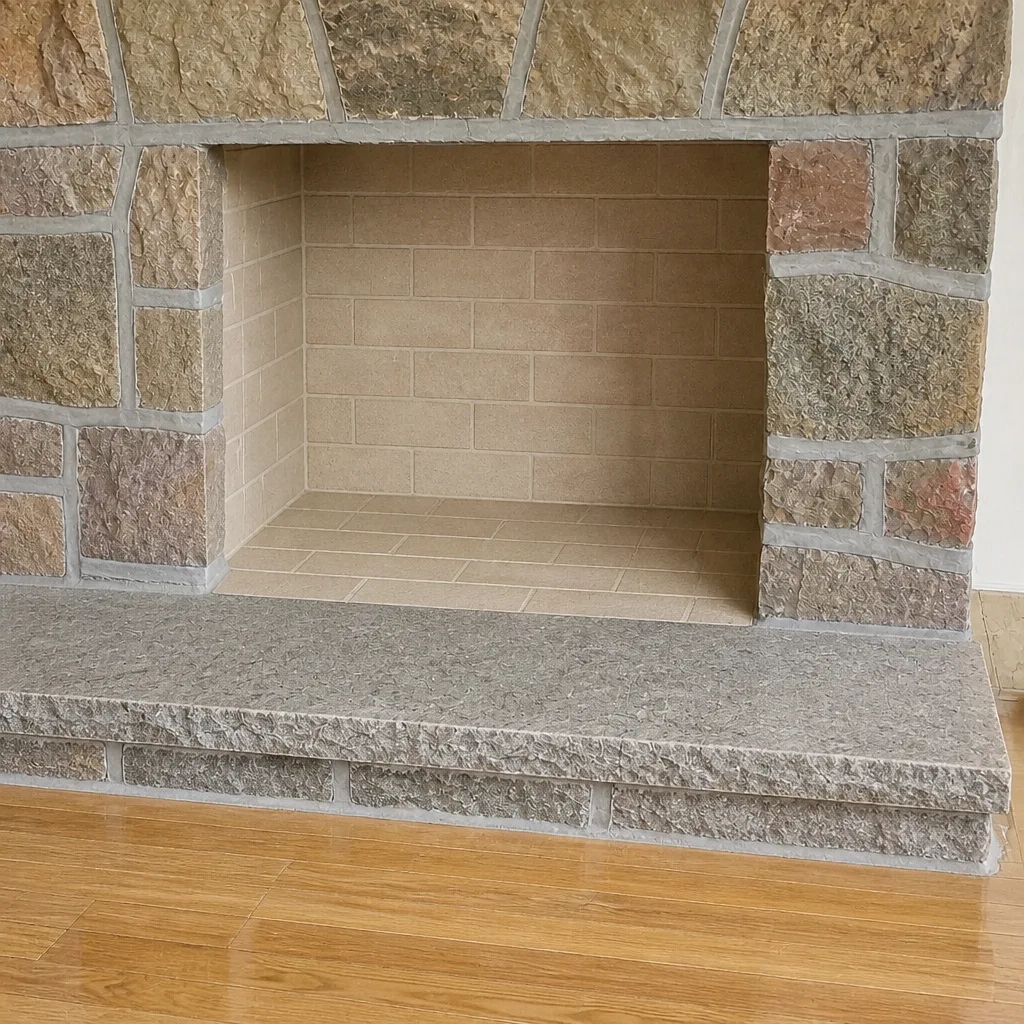
See the difference
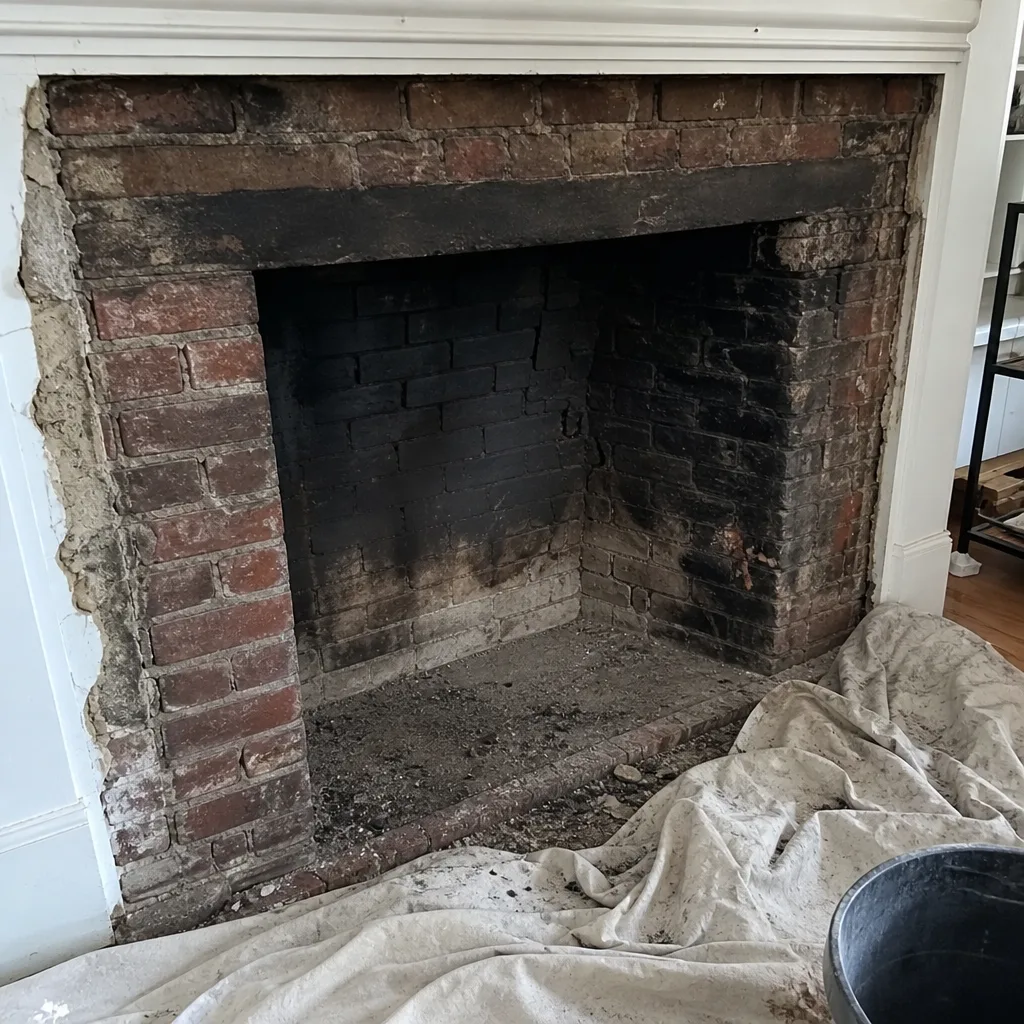 Before
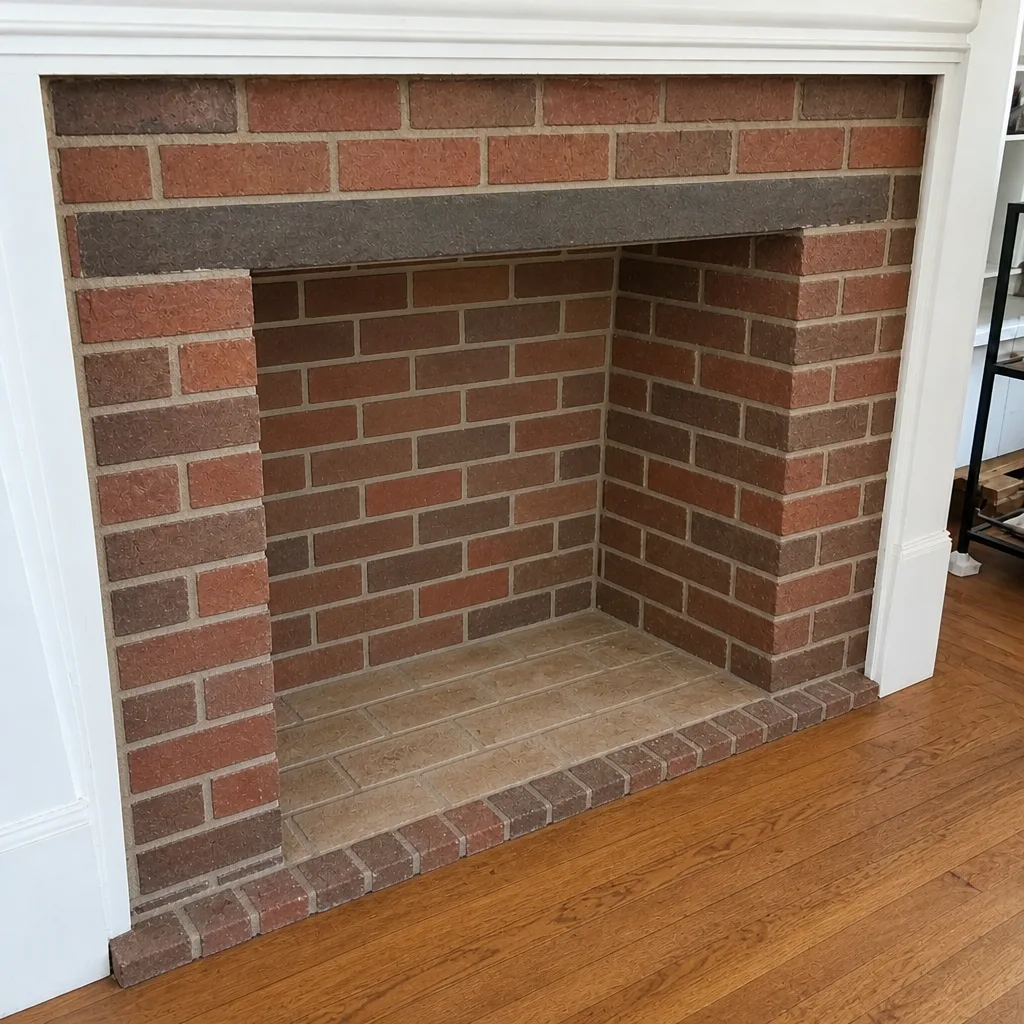 After
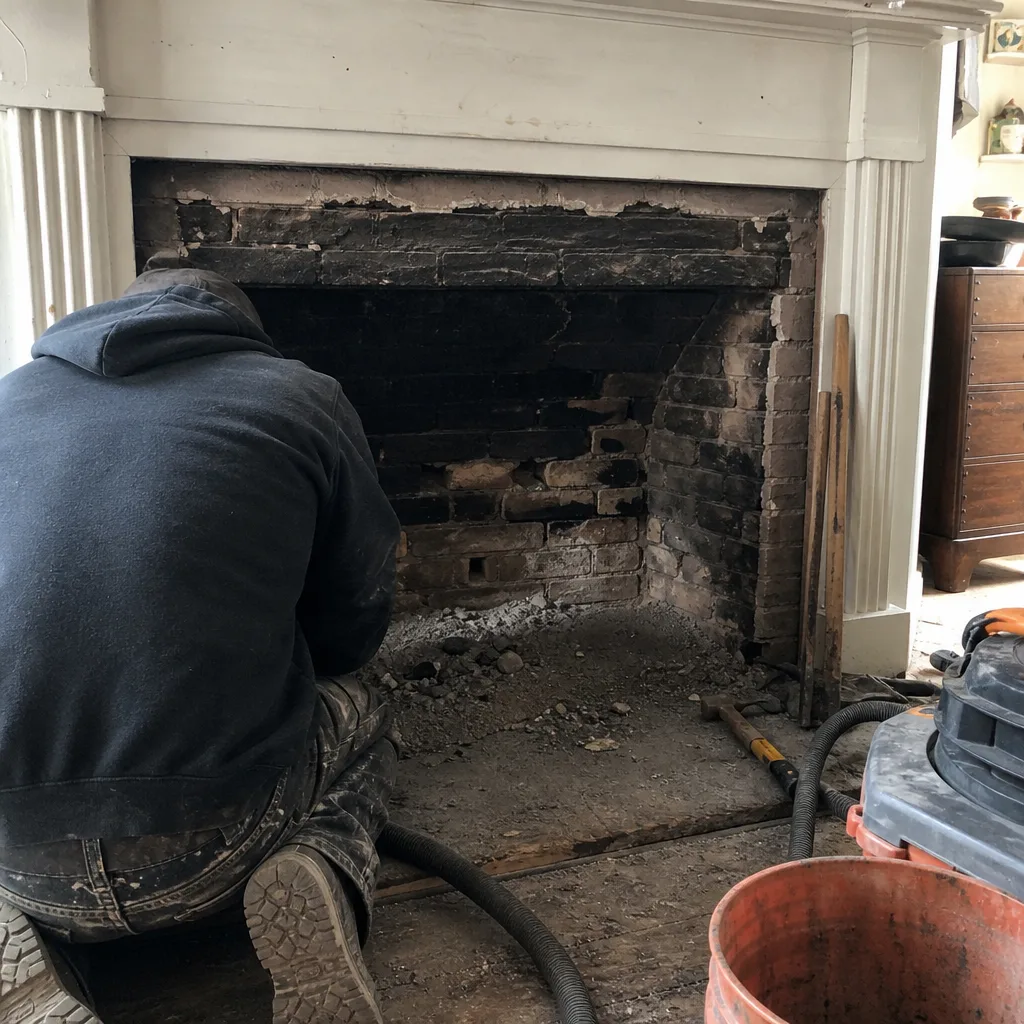 Before
 After
 Before
 After
When to Call a Professional
Call for professional service in these cases: smoke rolls into the room and stays; the flue wall looks glossy rather than dusty; you smell creosote with no fire burning, especially in more than one room; you see white staining, loose mortar, or a cracked crown on the exterior stack; the fireplace roars or whistles; you hear fire-related sounds through a neighbor’s wall in a shared-chimney building; you’ve burned a full cord of wood since the last cleaning; or you’re buying, selling, insuring, or renting a Jamaica Plain property with a fireplace. Chimney Sweep Jamaica Plain offers free estimates in Jamaica Plain – call (844) 443-3530. We answer 24/7, with fast dispatch from 7am to 7pm, Sunday through Friday. Every estimate is free, and the written estimate sets the final price. Our technicians have up to 14 years of experience, and appointment scheduling is straightforward.
Frequently Asked Questions
The two most serious are glazed creosote on the flue walls and smoke that rolls into the room instead of drafting up. Both are stop-use signs: don’t light another fire until the chimney is inspected, because either can lead to a chimney fire or smoke exposure in the home. Call (844) 443-3530 for an inspection – estimates are free.
The general rule is once a year if you burn regularly, and more often if you burn a lot of wood or use a wood stove as significant heat. Homes that burn only a handful of fires a season can often stretch the interval, but the flue should still be looked at each year – conditions change. If you’re not sure, book an inspection and ask before you commit to cleaning. Call (844) 443-3530 and we’ll help you decide.
White staining (efflorescence) on the exterior brick of a chimney means moisture is moving through the masonry and leaving mineral deposits as it dries. The cause is often a cracked crown, a failed cap, or a compromised liner, and it’s worth investigating before the masonry softens further. Call (844) 443-3530 for a cap and crown assessment – estimates are free.
Not necessarily. A liner is required when the existing flue has lost its integrity – cracked tiles, gaps at joints, or a Stage 3 creosote condition that resurfacing can’t correct. In some cases, HeatShield resurfacing restores the flue without a full liner replacement; in others, a DuraFlex liner system is the right fix. We inspect first, and we don’t recommend a liner unless the camera evidence supports it. Call (844) 443-3530 to book an inspection – estimates are free.
Creosote builds up faster than most homeowners expect, especially with cooler, slower fires or unseasoned wood. At Stage 2, it’s still cleanable. At Stage 3, it’s a fire hazard, and a normal brush won’t remove it. Skipping a cleaning doesn’t fail immediately, but it shortens the window in which a routine sweep can still prevent a bigger repair. Call (844) 443-3530 to schedule a sweep – the estimate is free and the price is set by the written estimate.
Massachusetts landlord obligations around fireplaces are set by the state sanitary code and the terms of your lease, and those are legal questions for an attorney, not a chimney technician. What we can say is that any warning sign in a rental unit is worth inspecting before the next lease term, and a standalone inspection report is documentation a landlord can hand to a tenant, an insurer, or a buyer. Call (844) 443-3530 to schedule a documented inspection in Jamaica Plain – estimates are free.
The Bottom Line
Your chimney is telling you three different things through three different channels: smell, smoke behavior, and deposits and staining. A creosote smell with no fire burning is usually a draft problem, not a cleaning problem. White staining on exterior brick is a moisture and structure problem. Glazed creosote on the flue wall is a stop-use situation. Reading the signs in the right sequence – what you smell, how the smoke behaves, what you can see inside and out – tells you whether to schedule a cleaning, book an inspection, or call for service before the next fire. If you’re not sure which applies, the safe move is a clean, documented inspection. One specialist for the full chimney – from cap to firebox. Our team handles fireplace repair as well, so a warning sign that turns out to be a firebox issue doesn’t require a second contractor.
Call Chimney Sweep Jamaica Plain at (844) 443-3530 for a free estimate. We answer 24/7. Fast dispatch from 7am to 7pm, Sunday through Friday. We inspect, we document with photos and camera footage, and we tell you plainly when work can wait.
Written by the team at Chimney Sweep Jamaica Plain.